
Name of the Asset | Addressing Policies on Refugee Self-Reliance: The Case of Waste Pickers in Beirut
Type of Asset | Research
Date | February 2026
DOI | 10.69814/wp/2026114
SUMMARY
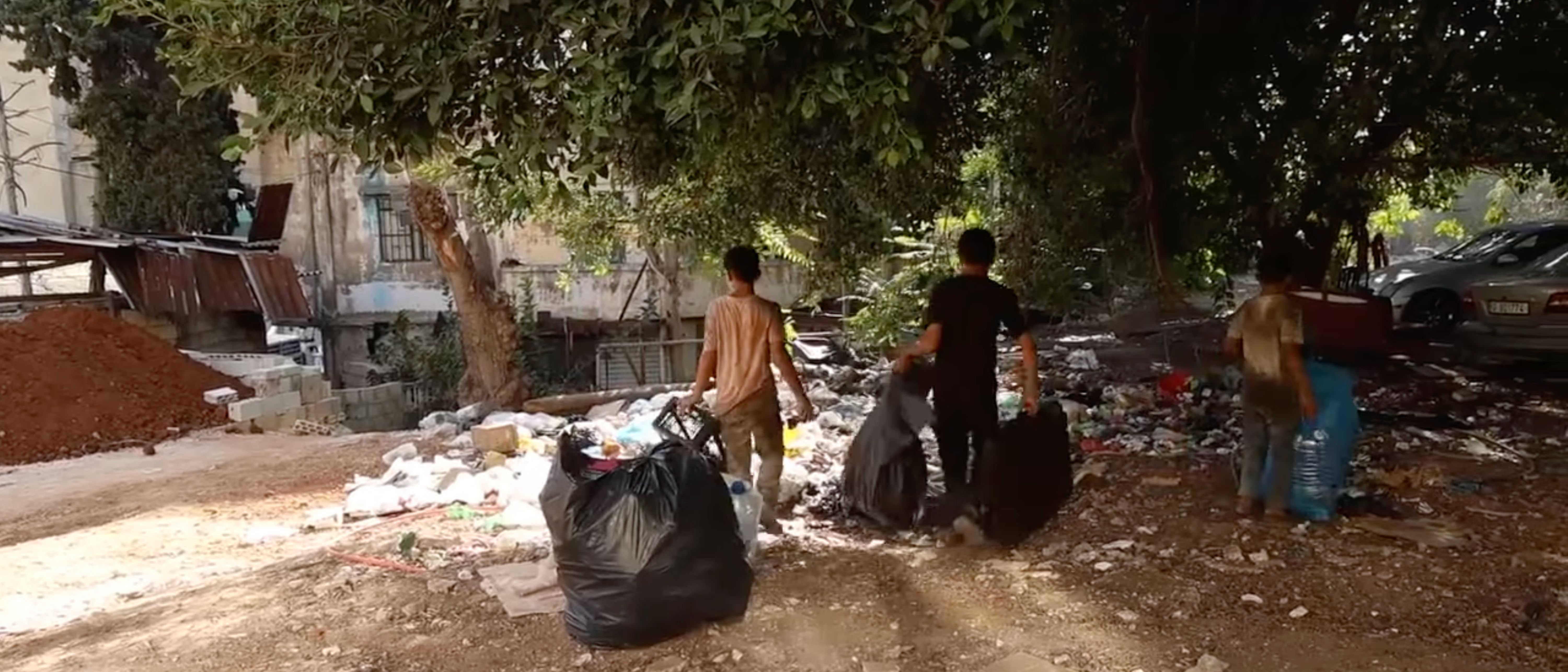
This study examines efforts towards refugee self-reliance through waste picking among Syrian refugee children in Beirut and interrogates the gap between global policy discourse and local realities. While self-reliance is promoted in the Global Compact on Refugees as a pathway to support refugees to meet their needs and sustain livelihoods until durable solutions – such as integration, resettlement, or voluntary return – are realised, in Lebanon it often unfolds in conditions of legal exclusion and informal governance, pushing refugees into precarious livelihoods rather than enabling genuine autonomy. The study draws on the trialectics framework for participation (Refstie & Brun, 2016) which conceptualises participation and agency as unfolding across intersecting formal, informal, and intermediary spaces, and highlights the need to engage multiple actors shaping everyday realities. Therefore, the study adopts an approach that brings into dialogue the lived experiences of refugee children and the perspectives of institutional stakeholders. It is based on qualitative research with 30 refugee waste pickers aged 7-17 and 10 institutional stakeholders, including representatives from relevant ministries, municipal authorities, NGOs, and private/environmental actors. The findings highlight how refugee children are central suppliers within Beirut’s informal recycling chain, yet remain unprotected, criminalised, and economically exploited. Three interrelated dynamics shape their everyday efforts toward self-reliance: (1) Selective enforcement and punitive governance, whereby children face harassment, confiscation, and violence from municipal authorities operating under political pressure, low capacity, and unclear mandates, while scrap traders remain largely protected; (2) Severe occupational and health risks, as children collect and sort contaminated materials without basic protective equipment, sustain frequent injuries, and face exposure to road accidents and hazardous waste; and (3) Systemic exploitation within the scrap trade, where children have limited bargaining power and are vulnerable to territorial control, coercion, and price manipulation. Based on these findings, the report proposes two policy pathways that can improve the work conditions of refugee waste pickers and strengthen their efforts toward safer and more dignified self-reliance on the short term. The proposed pathways include: (1) Urban inclusion and protection measures to reduce violence and improve safety: This includes training police and municipal actors on non-punitive engagement with waste pickers, as well as providing basic protective equipment such as heavy-duty gloves, safety boots, masks, and reflective vests; and (2) Work-based learning initiatives that link literacy, numeracy, and sector knowledge to children’s lived realities: These programmes support practical skills such as traversing the city safely, negotiating prices, understanding weights and materials, and reducing everyday exploitation. Importantly, these short-term initiatives are not intended to endorse or normalise child labour. Rather, they offer an entry point for immediate harm reduction and and protection from violence and preventable injury in a context where withdrawal is not immediately feasible. Building on this, the study proposes medium-term pathways and long-term reforms. In the medium term, the study proposes expanding alternative livelihood and apprenticeship pathways that build on children’s existing skills while gradually reducing dependency on hazardous street-based waste picking through safer, supervised work-and-learning trajectories. In the longer term, it calls for structural reforms that regulate the recycling economy and scrap trade including licensing, taxation, and labour protections, strengthen waste governance and oversight, and expand refugees’ legal residency, education, and employment access to enable sustainable pathways out of exploitative informal labour.
AUTHOR | Cyrine Saab
COUNTRY AND/OR REGION | Lebanon
PROGRAMME | Global Development Awards Competition (GDAC)
FUNDER(S) | Ministry of Finance, Government of Japan through the World Bank
PARTNER | Centre for Lebanese Studies (CLS). For more information, click here.


